My mental health journey as a late-diagnosed autistic person
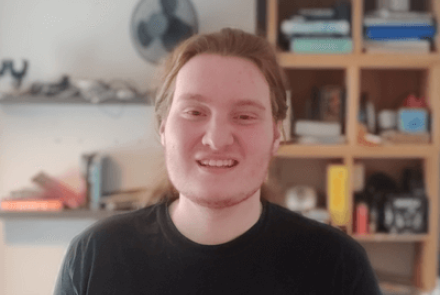
Hi, I’m Charlie (they/them), a 24-year-old autistic and ADHD non-binary person. I love music, gaming and anything fantasy or sci-fi related. In this blog, I’ll be sharing my lived experience of my own mental health struggles, as well as advice to anyone else who might be struggling right now.
I’ve suffered from anxiety, OCD and depression for over 12 years now – quite literally half my life so far, though most of what I can actually remember.
I’d always been an anxious child, but my struggles really began in secondary school. My teachers all labelled me as a “high achiever” and put massive amounts of pressure on me, when in fact it was my anxiety causing me to overwork myself to the point of complete burnout. I lived in constant fear of letting them down or getting into trouble.
I didn’t know I was neurodivergent at the time, and none of my teachers recognised any of the signs, despite them being quite obvious looking back now.
At the same time, I was being bullied and socially excluded by what felt like everyone else in my year group. I was terrified and alone every single day; combined with the exhaustion of unknowingly masking my autistic and ADHD traits all of the time, it’s no wonder this had a massive impact on my mental health.
Reaching breaking point
Eventually I just couldn’t carry on anymore. After repressing everything for so long, I had a massive autistic meltdown in the car on the way to school one day (sobbing, screaming etc.), though of course I didn’t know at the time that’s what it was. I left mainstream school shortly after at the end of year 8 to be home-educated, but the relief of being away from school soon turned into loneliness from being even more isolated at home.
I managed to study part-time and take my GCSEs at a local college but hit crisis point with OCD shortly after, so wasn’t able to progress to A-Levels the next year like I’d planned to. Although I didn’t realise it at the time, I’d already been depressed for years, but fell even deeper into it once my plans all fell apart. Once again, I found myself isolated at home, this time unable to function in my daily life without the support of my parents because of my severe anxiety and OCD.
My recovery since then has been long and slow – I’ve made a lot of progress with my mental health, but even now I still struggle, especially with depression. I feel like I’ve fallen through the cracks of the education system and am now left burnt out and lost, unsure of what comes next.
Years of unseen struggles
This is sadly a common experience for neurodivergent people, especially late diagnosed women and AFAB people like me who have gone so many years without ever having our difficulties recognised. I didn’t realise I was neurodivergent until after I left mainstream school, and didn’t get my autistic diagnosis until age 16.
I often wonder how different things might have been if I’d only known earlier. Despite everything though, I have hope for the future, since I now have a much better understanding of my needs and how to support myself. I’m confident I’ll be able to rebuild my life in a way that works for me, even if I haven’t figured out exactly what that looks like yet.
Therapy was life-changing
For me, therapy has completely transformed my life for the better, and has been such a vital step in my recovery journey. It’s helped me to understand what has actually been going on in my brain, and taught me many different techniques to help calm my mind and body in moments of anxiety.
My current therapist is neurodivergent too and a truly wonderful person. It’s thanks to her that I’ve realised my difficult experiences in school are actually trauma I’ve been carrying with me all these years, which is still affecting me now, and by talking with her about these experiences I can finally start to heal from them.
I can’t stress enough how helpful therapy can be – just having that safe confidential space to talk about anything that’s on your mind is so incredibly valuable. Every therapist is different though and it’s important to find one that works best for you.
Feeling “left behind”
It can be tough to see other people my age living fully independent lives and having already achieved so much, when my life seems so empty in comparison. It honestly feels like it hasn’t even started yet despite me now being in my mid-twenties.
In these moments, however, I remind myself that overcoming so many of my mental health struggles and managing to continue on despite everything is a massive achievement, even if it isn’t visible to other people from the outside.
As I write this post, I’m on holiday with my family, something I never thought I’d be able to do ever again a few years ago – yet here I am now, enjoying myself in an unfamiliar environment while experiencing very little anxiety and OCD at all. It’s easy to forget how difficult things truly were, and how much progress I’ve made.
There’s really no such thing as being “behind” in life anyway; life is full of ups and downs, and no two people’s paths look the same.
What to do if you’re struggling
If you’re in a similar position to me or struggling with your mental health in any way, I really hope this has made you feel less alone. I know from experience that if you’re at a low point, it doesn’t always help when other people tell you “things will get better”. Even though this is often true, our brains love to trick us into thinking that how we feel right now is how we’ve always felt and will feel forever.
So instead, try reminding yourself simply that “things can change”, because your brain can’t argue with that – things are constantly changing around us all the time, regardless of whether you take any action or not. But also remember that, when you’re ready to, you have the power to seek out that change yourself in whatever way you can.
Small steps you can take today:
- Do something to distract yourself from any difficult thoughts – listen to music, draw/colour something, read a book, watch your favourite show/film (if you have autistic special interests like I do, lean into them!!)
- Spend some time outside if you’re able to, or even just open a window and breathe in the outside air – this helps to calm your body and regulate your nervous system
- Do some research online – knowledge is power, and you’ll find plenty of helpful resources and people with similar experiences
- And most importantly, talk to someone about how you’re feeling, whether that’s a friend, parent/guardian, teacher or helpline – there’s always someone who will want to listen to you and help you, if you just take the step of reaching out to them.
Even the tiniest of steps can make a massive difference to how you feel. You deserve to have a life full of happiness!
About the author
Charlie (they/them) is a 24-year-old autistic and ADHD non-binary person. They love music, gaming and anything fantasy or sci-fi related.